Cocktail hour is the most underrated hour of a wedding day. It’s the first time your guests are together as a group without a program running, no ceremony to sit through, no toasts to listen to, no dance floor to feel obligated to join. It’s pure social time, and it’s also the hour most likely to feel flat if nobody’s thought about it, because a room full of mingling guests and a bar cart isn’t automatically a good atmosphere. It becomes one with the right ambient layer underneath it.
The job cocktail music actually does.
This isn’t reception music at a lower volume. A full band playing quietly still sounds like a full band; it pulls focus, it invites people to stop and listen instead of talk, and it can make a room feel like it’s performing at people rather than hosting them. Cocktail hour needs something closer to a soundtrack: present enough that the room doesn’t feel empty or awkward, unobtrusive enough that a conversation between two people three feet away doesn’t require raised voices.
What’s included.
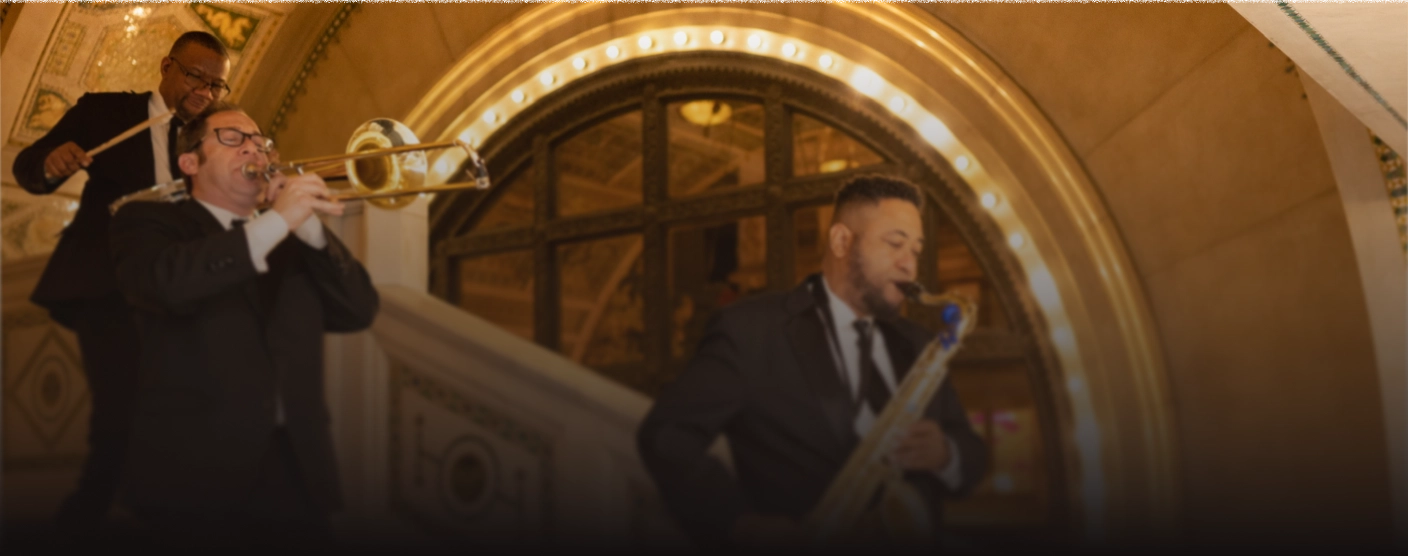
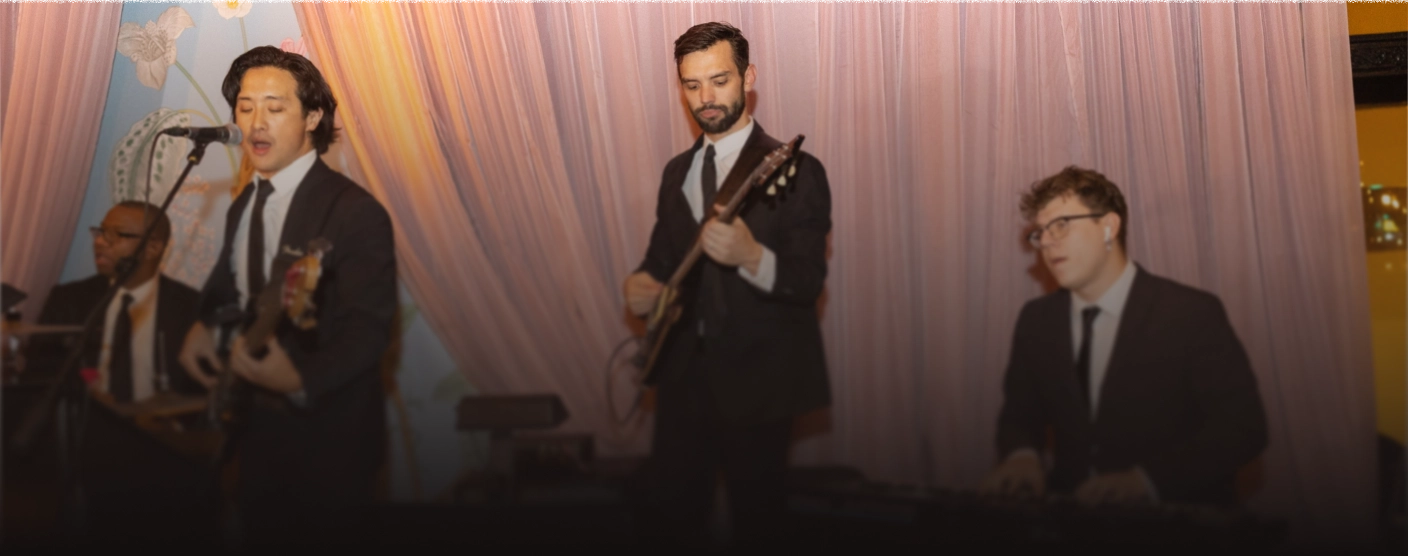
Typically a smaller subset of the full band: a duo, trio, or small combo, often built around guitar, keys, and a vocalist, sometimes with light percussion, playing a set specifically chosen and arranged for background listening. The material tends to skew toward warmer, more acoustic arrangements of familiar songs, since recognizable-but-not-loud is usually the sweet spot: guests register it, enjoy it, and don’t feel pulled away from their conversations.
Where it fits in a wedding day.
Cocktail hour usually runs about an hour, bridging the ceremony and the reception while the room is reset, photos are finished, and the wedding party takes a breath before being introduced. It’s also frequently the first real chance guests get to talk to each other, particularly at weddings where family and friend groups are meeting for the first time, which is part of why the tone in the room matters more than people expect going in.
Why this is often added rather than booked alone.
Most couples don’t book cocktail-hour music as a completely standalone package; they add it to a ceremony or reception booking so the same musicians (or a subset of the same band) carry through multiple parts of the day without a gap in sound. That said, it works perfectly well on its own if other entertainment or a DJ is handling different parts of the day and you specifically want a live layer just for this hour.
A note on venue logistics.
Cocktail hour is often in a different space than the ceremony or reception a lobby, a terrace, a separate lounge- which means load-in and setup for this segment sometimes has its own timeline apart from the rest of the band’s equipment. If you’re mixing vendors across different parts of the day, it’s worth flagging your venue’s layout early so cocktail-hour music can be planned around the actual room it’s happening in.
Reading the room during the in-between hour.
Cocktail hour has a strange emotional texture that’s easy to underestimate when you’re planning a wedding on paper. Guests are often still processing the ceremony some emotional, some relieved, some meeting extended family for the first time while also settling into “party mode” for the first time that day. A band playing this segment well doesn’t force a mood; it tracks where the room already is and nudges it gently forward, so that by the time cocktail hour ends, the energy has crept up naturally rather than snapping abruptly into reception mode. That’s a subtler job than it sounds, and it’s the reason cocktail-hour sets are built and chosen deliberately rather than treated as a lower-effort placeholder before the “real” music starts.
What to bring to the conversation.
If you have a specific mood in mind for this hour warm and jazzy, stripped-down acoustic, something with a bit more rhythm to it that’s worth communicating early, since it shapes both instrumentation and repertoire. Couples who skip this conversation usually still get a good cocktail hour, since the default approach is built to work broadly, but couples who do have it tend to get a set that feels more specifically like their wedding rather than a well-executed generic one. It’s also worth mentioning if you have dietary, allergy, or other considerations that affect where the bar and food stations are set up relative to where the band will be playing, since sound bleed and foot traffic patterns both factor into a good cocktail-hour setup.
Best for: Adding a live-music layer to cocktail hour without committing to a full-band segment, weddings where cocktail hour happens in a separate space from the ceremony or reception, and couples who want their guests talking to each other rather than watching a stage during this specific hour.
Less of a fit if: You want a big, attention-grabbing moment during cocktail hour itself that’s a different kind of energy than this package is built to deliver, and would be better served by folding a small live moment into The Classic or Showcase’s broader coverage.