Private executive events an intimate dinner for a board, a small retreat, a leadership offsite, a private celebration for a small group of senior stakeholders operate under a version of the same challenge as a small wedding: there’s nowhere for anything to hide. A room of fifteen or thirty people notices every detail, including musical ones, in a way a three-hundred-person ballroom simply doesn’t.
Discretion as a design principle.
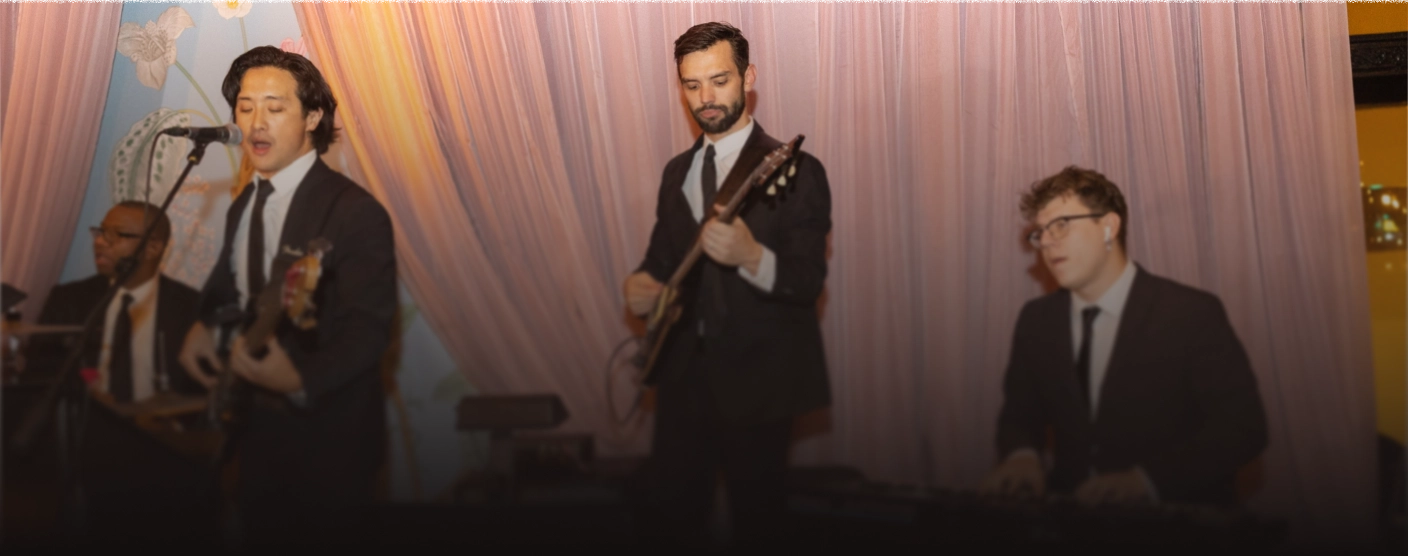
Executive events rarely call for a full-scale, attention-grabbing production. What they call for is precision music that’s genuinely excellent but doesn’t pull focus from the conversations, relationships, and business actually happening in the room. A private dinner for a leadership team is not the setting for a loud, attention-seeking set; it’s the setting for a tight, tasteful ensemble that elevates the room without ever becoming the story of the evening.
Scaled-down doesn’t mean lower quality.
The temptation with a small private event is to assume the entertainment budget and production value should shrink proportionally to the guest count. In practice, the opposite is often true: a room this small and this senior notices quality more acutely, not less. A solo pianist, a jazz trio, or a small acoustic ensemble performing at the highest level often makes a stronger impression on a room of twenty executives than a larger band would, simply because every musical choice is more exposed and more closely heard.
Confidentiality and professionalism
Private executive events often involve sensitive business conversations, unreleased information, or simply a level of privacy that participants expect and value. Musicians performing at this kind of event need to operate with the same professionalism and discretion as any other vendor granted access to a closed-door business setting, present, excellent, and entirely unobtrusive to the actual purpose of the gathering.

Matching instrumentation to the actual room
A private dinner in a wood-paneled private club room, a rooftop cocktail gathering, and a boardroom reception each call for a genuinely different instrumentation choice, not just a quieter version of the same band. A solo pianist reads correctly in an intimate, traditional dining room in a way a full amplified combo never would; an acoustic guitar-and-vocal duo might be exactly right for a rooftop where the goal is ambient warmth rather than a focal performance. Getting this match right is less about volume and more about matching the visual and social register of the room itself.
Flexibility around unpredictable executive schedules.
Private executive events are often subject to last-minute schedule changes in a way that larger public events simply aren’t. A key attendee’s flight gets delayed, a meeting runs long, the program shifts by forty-five minutes because the group is still deep in conversation and nobody wants to interrupt it. Musicians working this kind of event need real comfort with that unpredictability: extending a set smoothly, compressing it if needed, and adjusting without making the schedule change feel disruptive to the room.
What “zero room for error” actually covers
In a room this size, every technical or musical misstep is audible and visible to every single guest; there’s no crowd noise to absorb a wrong note, no large dance floor to distract from a transition that doesn’t land cleanly. That’s part of why this category calls for a smaller, tightly rehearsed ensemble rather than a scaled-down version of a larger configuration: fewer moving parts means fewer opportunities for something to go wrong in a room where everyone would notice if it did.
Planning conversations that matter more at this scale.
With a small guest list, it’s worth being specific about who’s actually in the room; industry, seniority, and even the general personality of the group can meaningfully shape what repertoire lands well. A leadership team that skews younger and more casual will respond differently than a board of long-tenured industry veterans, and a private event benefits from that kind of specificity in a way a five-hundred-person gala simply doesn’t need.
Best for: board dinners, leadership retreats, small private celebrations for senior stakeholders, and any executive gathering where the music needs to be excellent without being the center of attention.
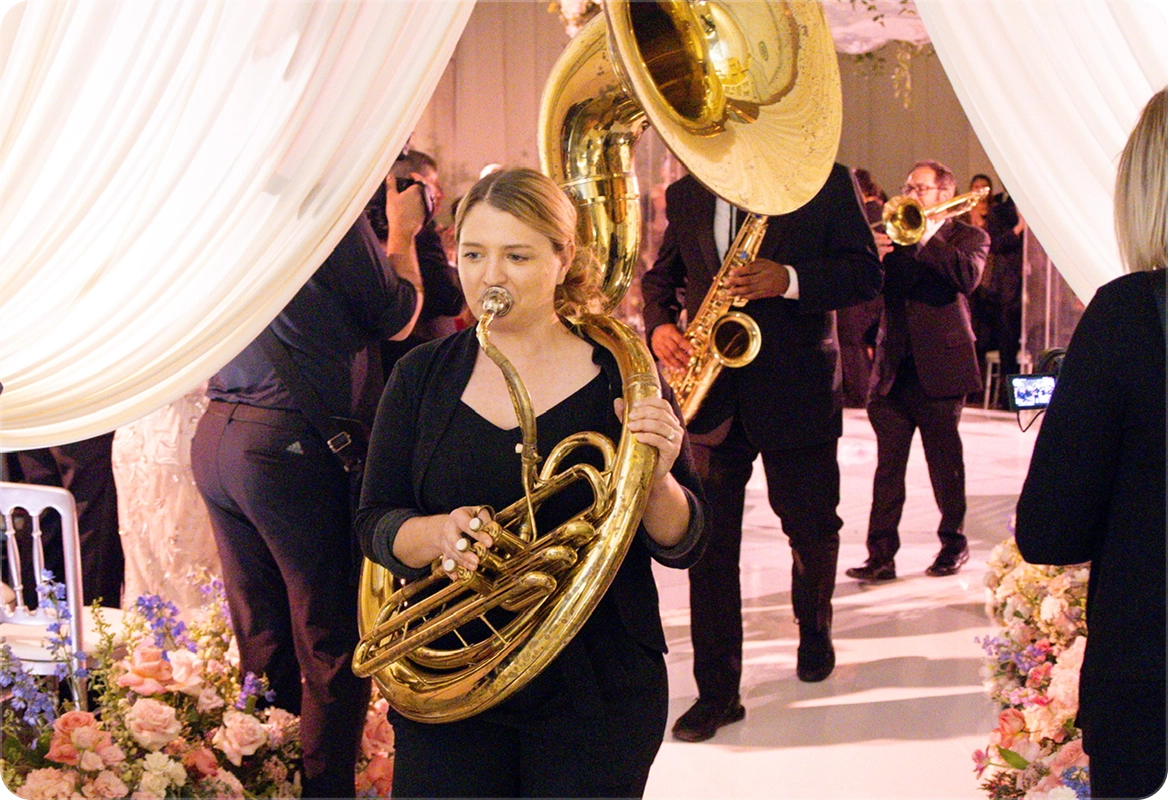
Less of a fit if: you’re hosting a larger company-wide event at that scale, a bigger configuration like The Corporate Gala or Brand Activation setup will read more appropriately for the size of the room.