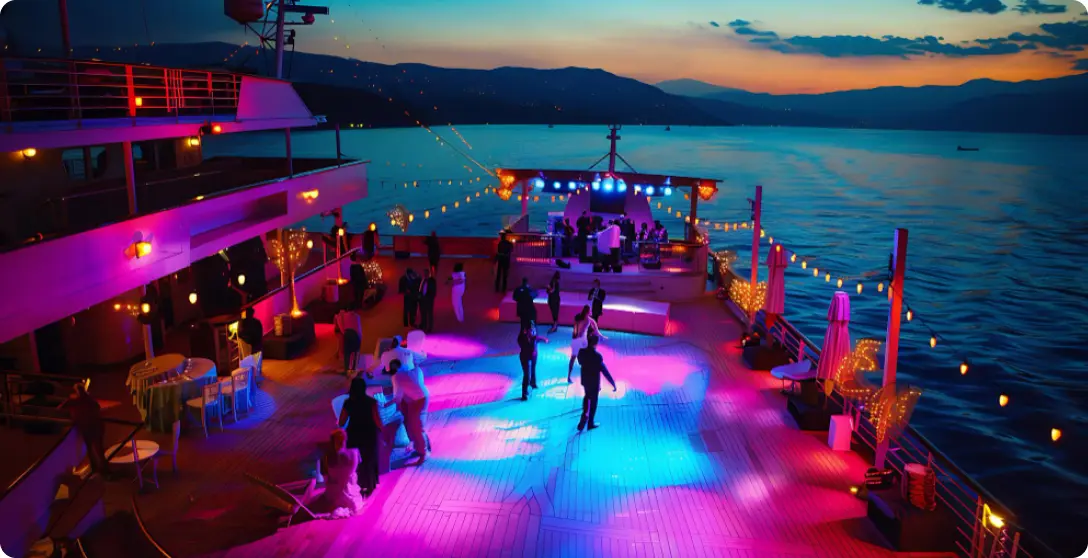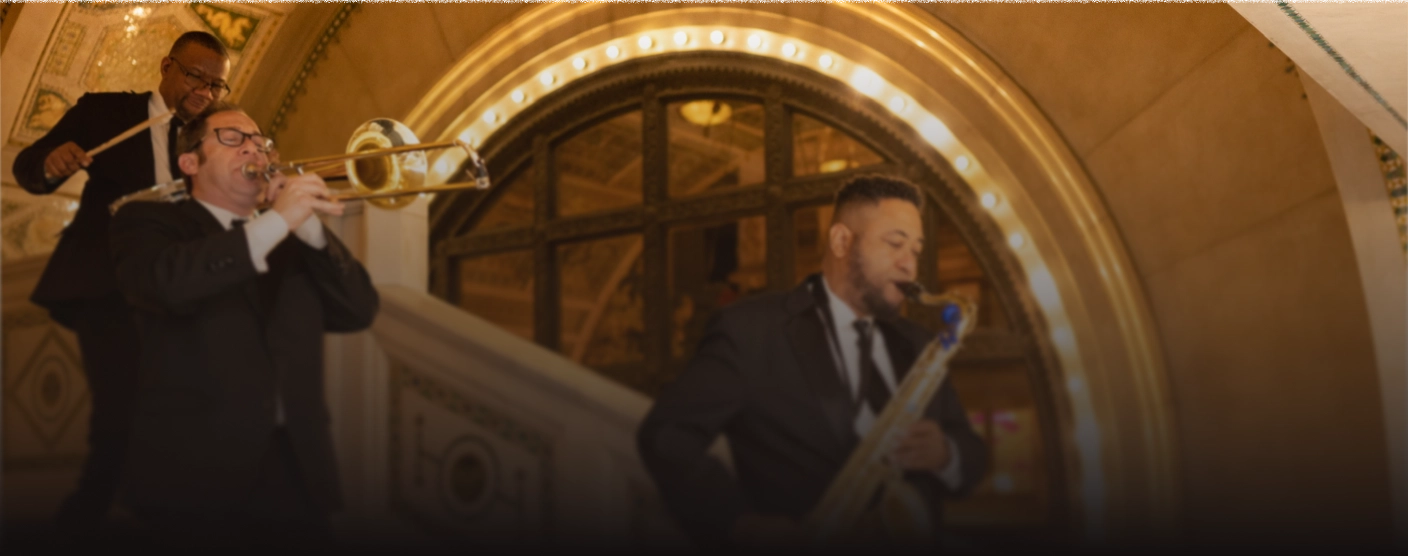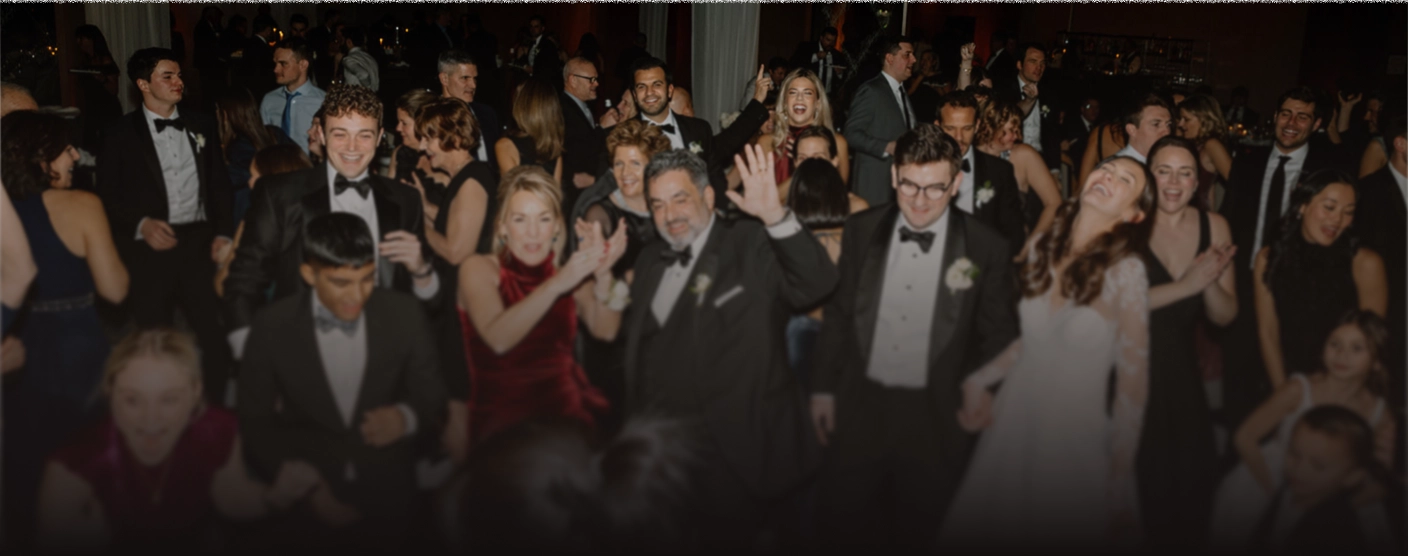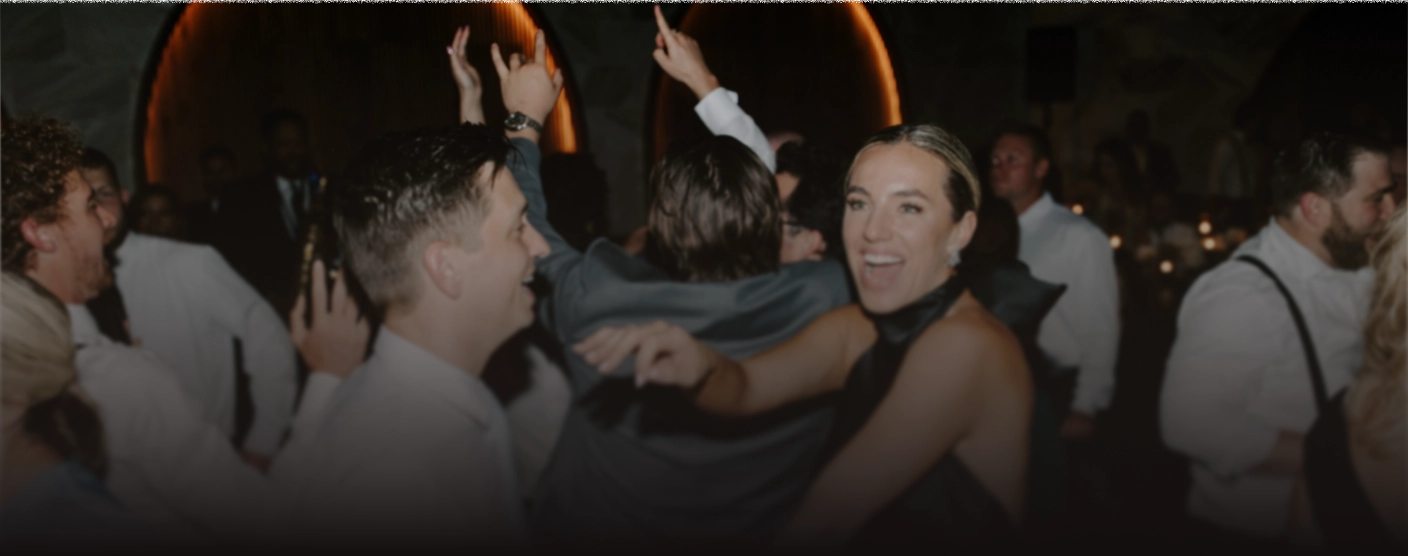
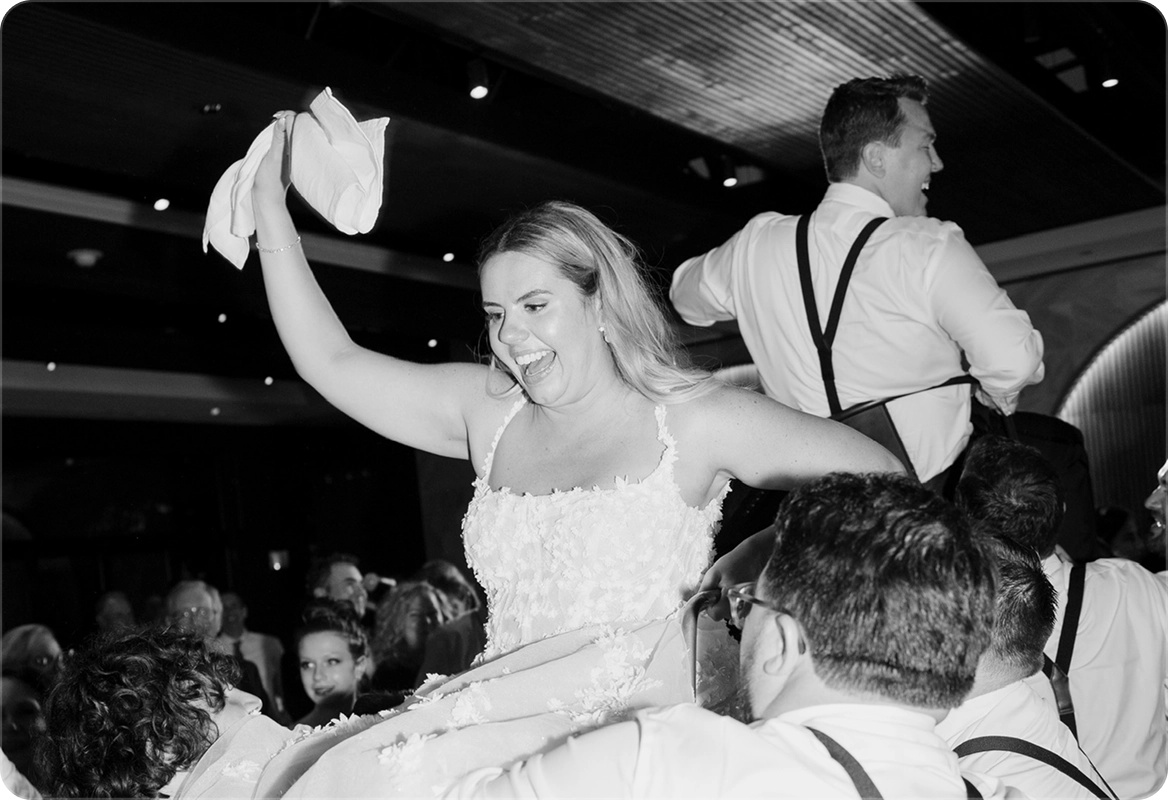
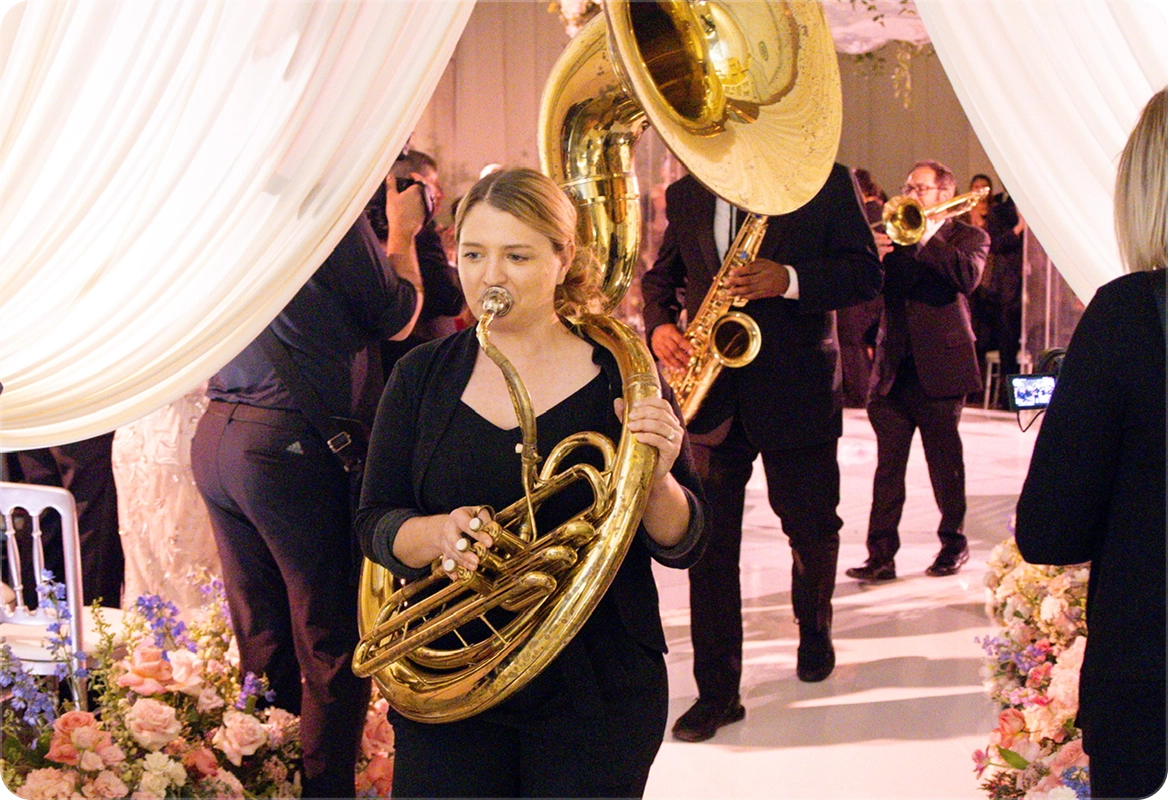
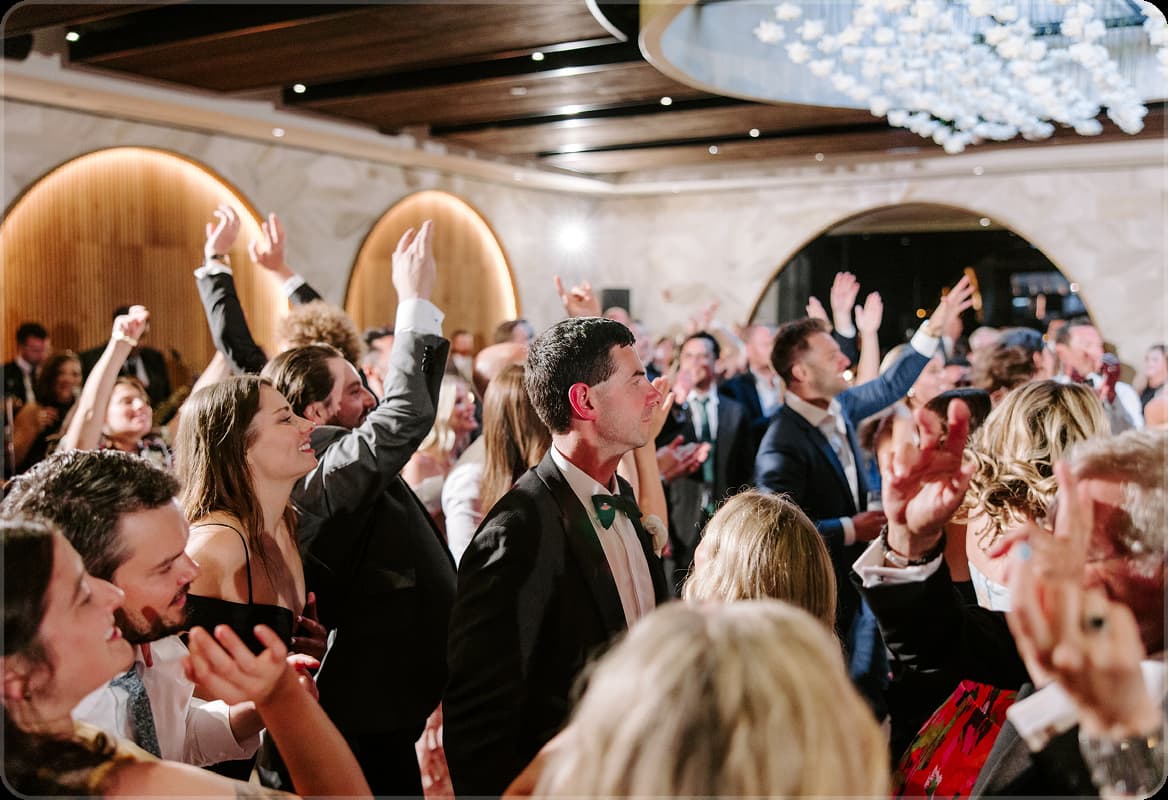
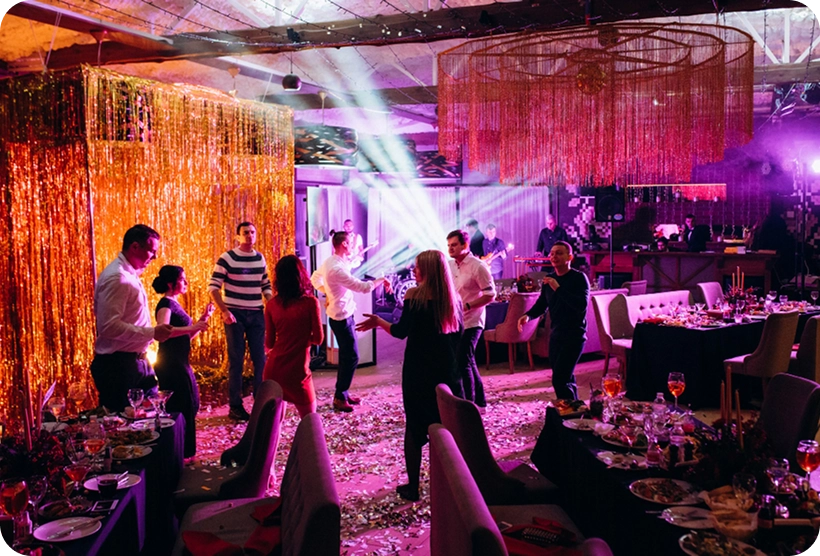
An annual dinner or corporate gala carries a different kind of pressure than most live events. The guest list often includes executives, major clients, board members, and long-tenured employees in the same room- people with genuinely different expectations of what “good” sounds like, and very little patience for anything that feels amateur. This is also frequently the one night a year a company invests real production value into, which means the band isn’t just background entertainment; it’s part of how the organization is presenting itself.
What that means in practice.
The set has to work across a wide range of tastes without ever feeling like it’s playing it safe. Music during dinner service needs to feel polished and intentional the kind of arrangement that signals quality without anyone consciously registering why- while the dancing portion of the night has to build convincingly, even in a room where a meaningful share of guests are colleagues who don’t necessarily know each other well and aren’t naturally inclined to be the first ones on the floor. Getting a room of executives and their plus-ones dancing takes a different kind of read than a wedding crowd, where family ties and social permission already exist. At a corporate gala, the band often has to build that permission from nothing.
Formal program integration.
Annual dinners typically carry more structured programming than a private celebration: award presentations, leadership remarks, a year-in-review segment, sometimes a keynote or fireside chat woven into the evening. The band’s role includes managing the space around that programming: walk-in and walk-out music for speakers, transitional cues between segments, and dinner music that fills silence without competing with anything happening at the podium. None of that is incidental; a poorly timed musical cue during a CEO’s remarks is the kind of small misstep that’s very noticeable to the people it embarrasses.
Matching the room’s formality.
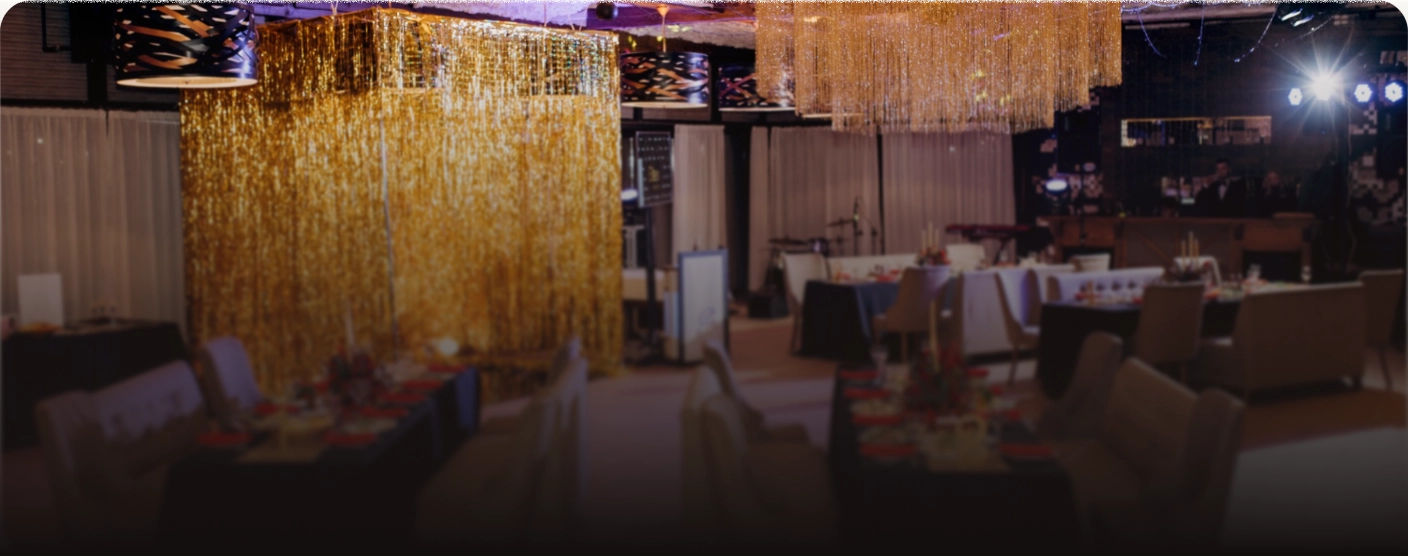
Corporate galas run the gamut from black-tie ballroom affairs to sharper, more contemporary corporate aesthetics, and the band’s presentation, visually and musically, needs to match. A room full of custom lighting, branded signage, and a genuinely high production budget deserves a band that reads as part of that production rather than a bolt-on.
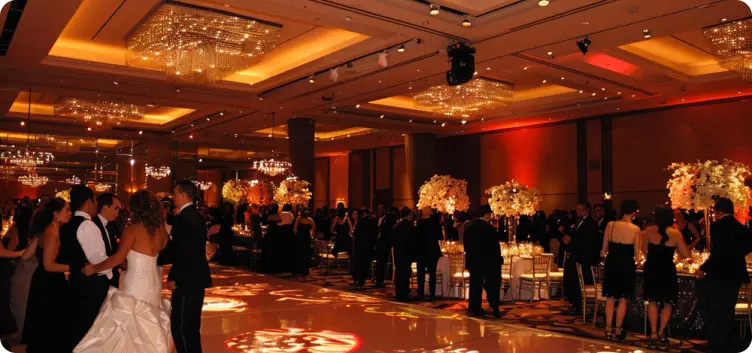
Reading a mixed-generation, mixed-relationship crowd
Few rooms are harder to program music for than a corporate gala guest list. You’re working across a genuine generational spread, from summer interns to founders who’ve been building the company for thirty years, plus spouses and partners who may have zero context for the inside jokes and shared history the rest of the room is running on. There’s also a meaningful split between people who know each other extremely well and people meeting for the first time across departments or business units. A set that works for this room has to be broad without becoming bland: recognizable enough that nobody feels excluded, but still specific and well-chosen enough that it doesn’t feel like elevator music with a live band attached.
The unglamorous logistics that make the night work.
Corporate galas are frequently held in hotel ballrooms or convention-style venues with in-house AV and catering teams already running a tight production schedule. That means load-in windows, soundcheck timing, and stage placement are often dictated more by the venue and the broader event production than by the band alone, which makes early coordination between the band, the venue’s event manager, and whoever’s running AV essential. A band experienced in this kind of venue knows how to work within someone else’s production framework rather than needing the whole night built around them.
Why the little details get noticed.
In a room full of people who evaluate vendors and service quality professionally, because that’s literally what many of them do for a living, a band that’s slightly underprepared, slightly under-rehearsed, or slightly mismatched to the room’s formality stands out in a way it wouldn’t at a more casual event. That’s not a reason to be intimidated by corporate galas; it’s the reason this category exists as its own configuration, built specifically for a room where the standard is genuinely higher, and the audience is genuinely more discerning.
Best for: Annual dinners, leadership galas, milestone anniversary events, and any corporate evening where the guest list includes senior stakeholders and the standard for polish is genuinely high.
Less of a fit if: The event is smaller and more casual; an office holiday party or a team celebration is usually better served by a leaner, more relaxed configuration than a full gala-scale production.