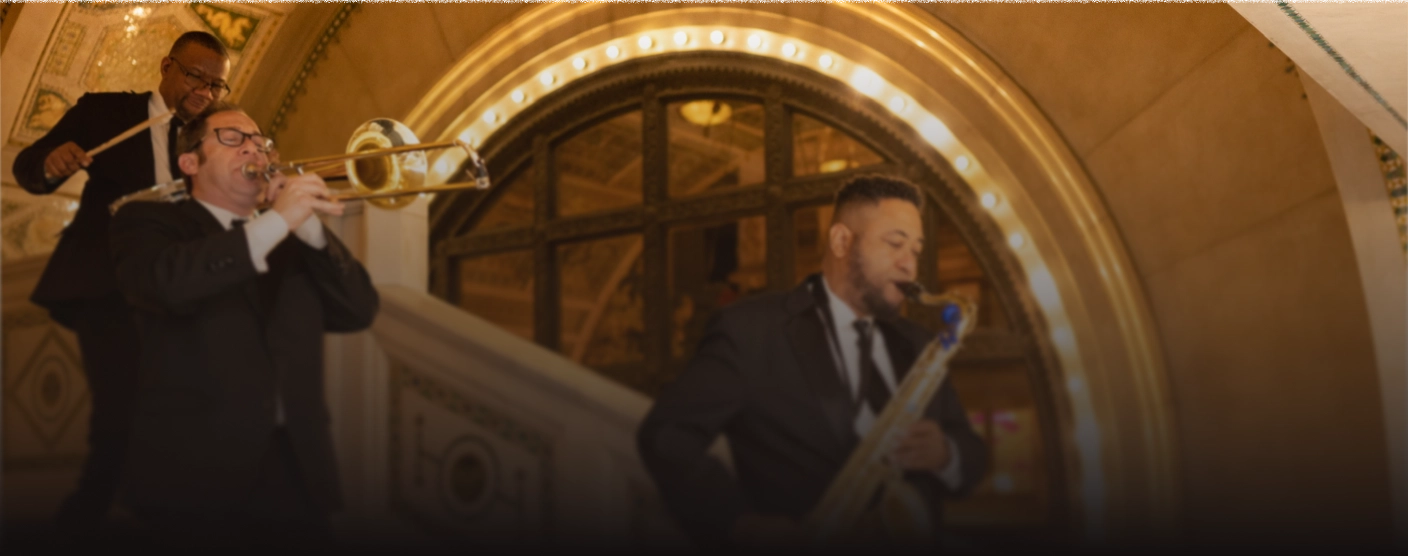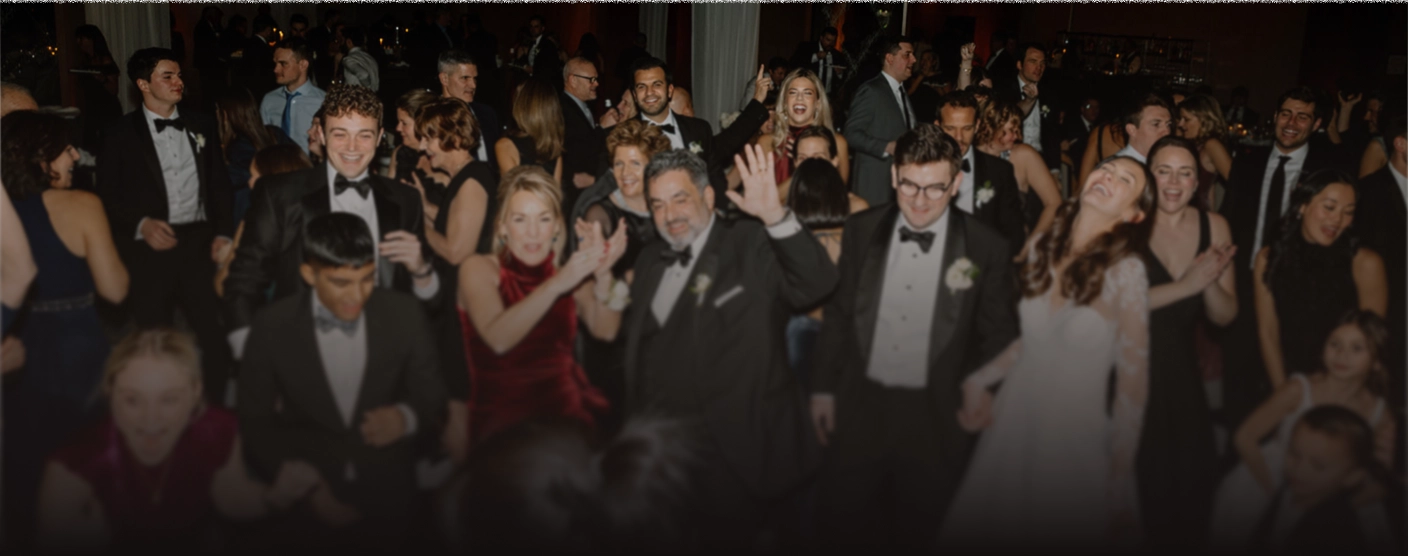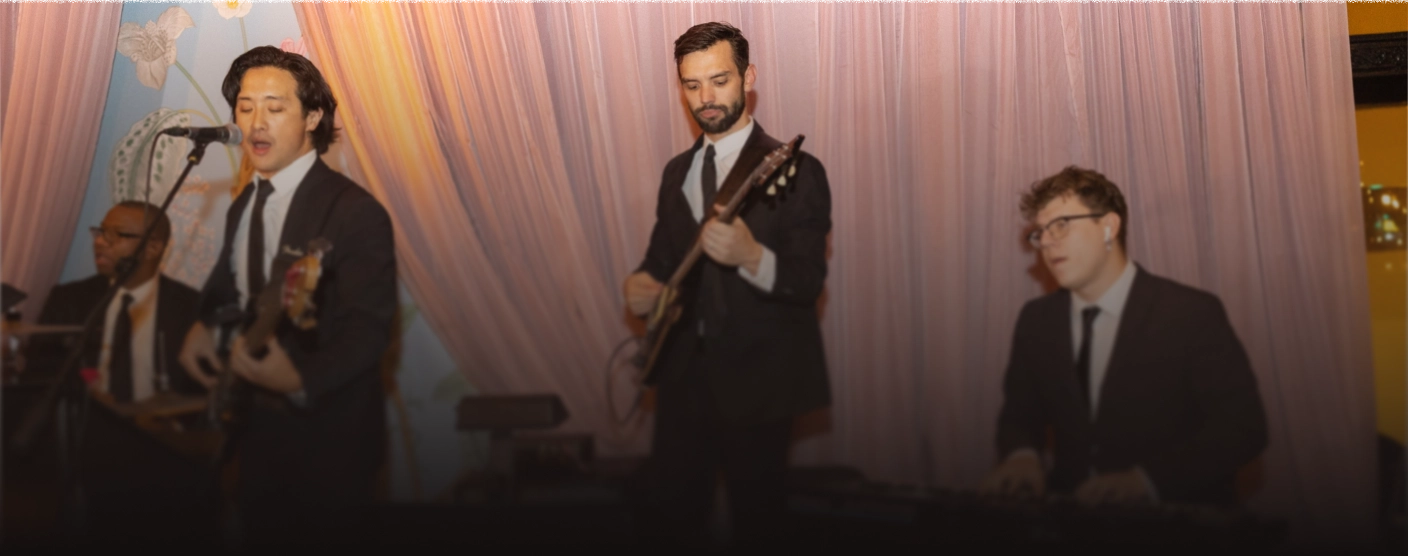
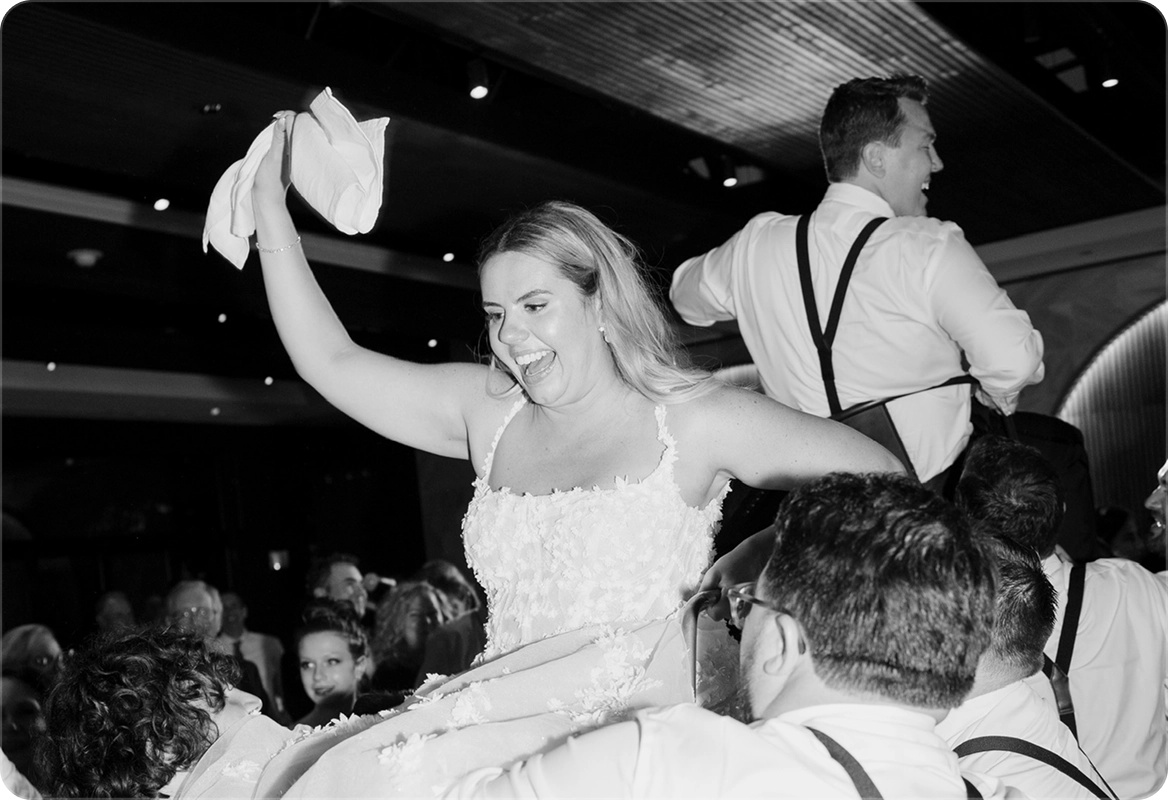
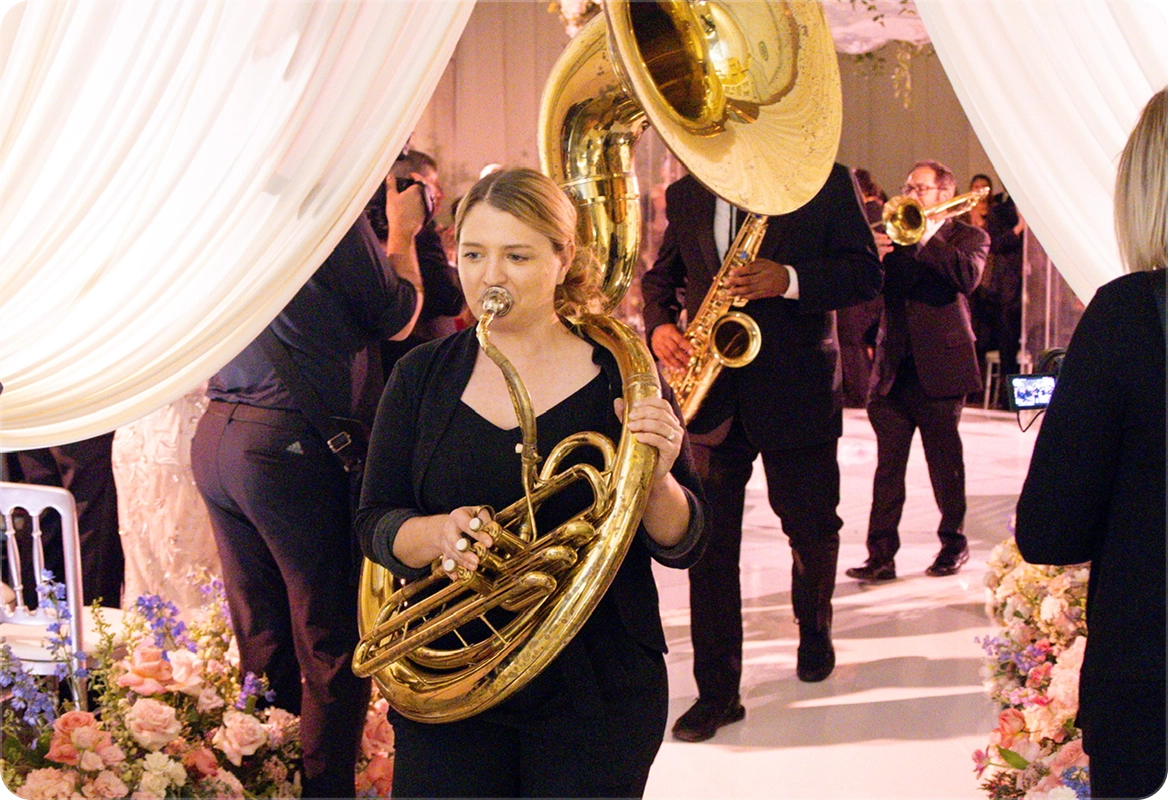
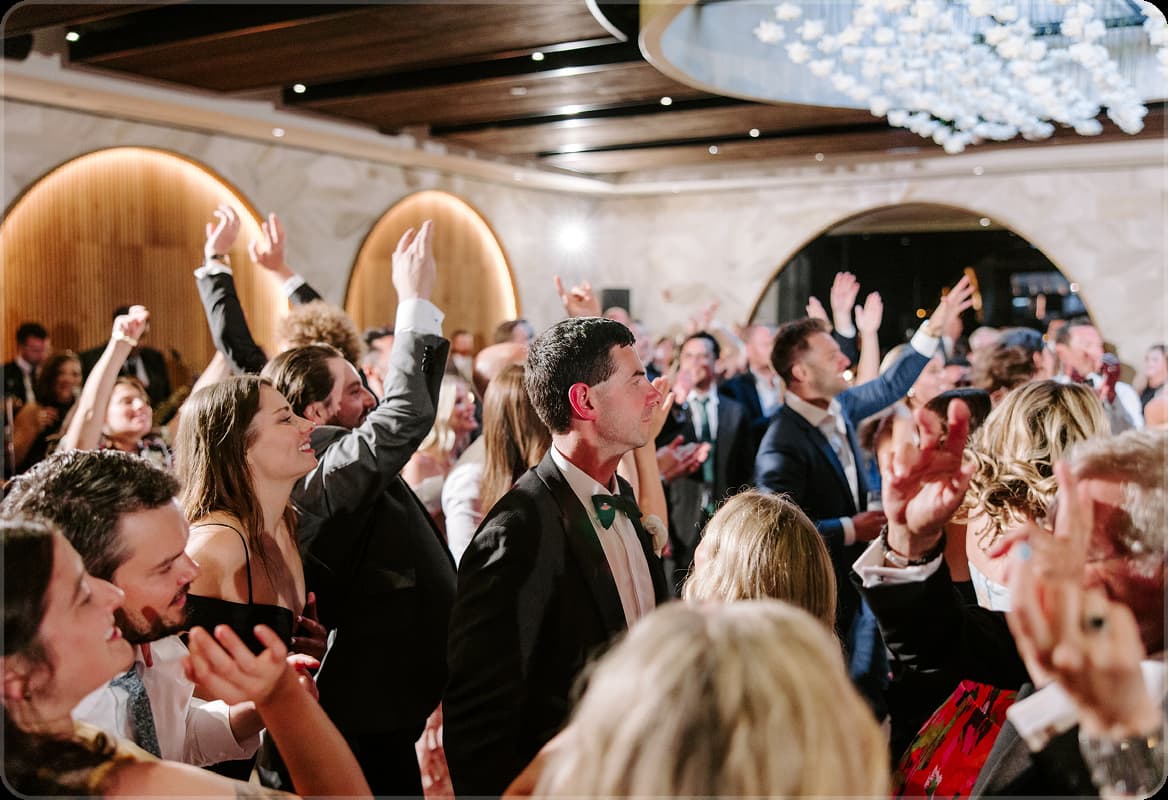
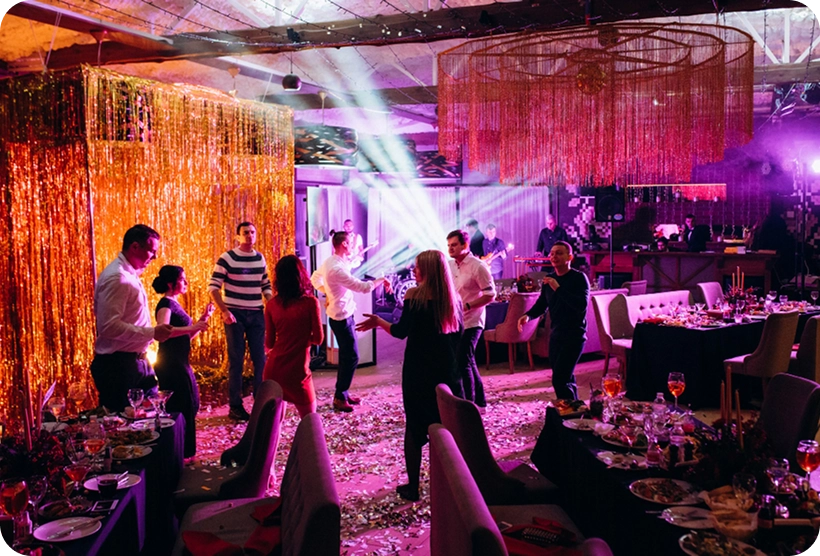
A conference reception or keynote afterparty has a structural challenge that most other corporate events don’t: attendees have often been sitting in sessions all day, are meeting a large number of new people in a short window, and are frequently more interested in networking than in being entertained outright. The band’s job here is closer to hospitality than performance, creating an atmosphere that makes it easy for strangers to strike up a conversation, rather than a spectacle that pulls focus away from the networking the event is actually built around.
Energy that supports conversation, not competes with it
Much like a wedding cocktail hour, a conference reception needs music that fills a room with warmth and energy without forcing anyone to raise their voice to be heard. Attendees are there to exchange business cards, follow up on a session that resonated with them, and meet people relevant to their work, and a band playing too loud or too attention-grabbing actively works against that goal, however good the music itself might be.
Bridging sessions and keynotes
Conferences often have specific structural moments: the transition out of a keynote, a networking break between sessions, an evening reception that closes out a full day of programming, each of which benefits from a slightly different musical register. Walk-out music after a keynote can carry real energy, since attendees are leaving a structured session and entering open time. A networking break earlier in the day calls for something calmer and more functional. The evening reception, often the one moment in a multi-day conference built purely for socializing, can carry more of a genuine “afterparty” feel, especially on the final night of a multi-day event.
Scaling with the event
A small regional conference reception for eighty attendees calls for a different configuration than a keynote afterparty for a thousand-person industry conference, and the band’s scalability from a small acoustic combo up toward a larger full-lineup setup matters here just as much as it does for any other event type.
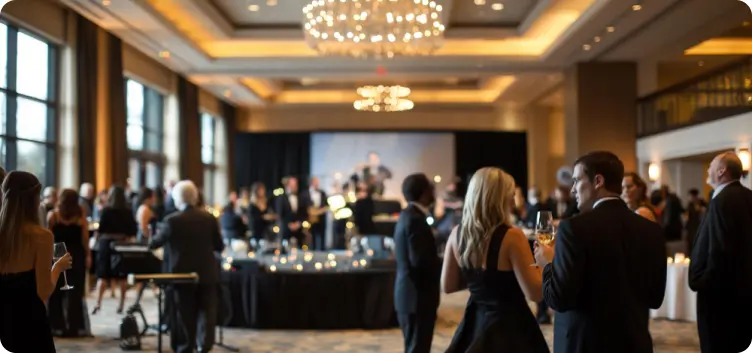
A room full of strangers, more than any other event type.
Weddings and corporate galas both draw crowds with existing social ties: family, longtime colleagues, mutual friends. A conference reception is often the opposite: a room largely made up of people who’ve never met, many of whom traveled specifically to make new professional connections in a short window of time. That changes what “good energy” actually means. The goal isn’t to get everyone dancing together; it’s to create a texture in the room warm and lively enough that striking up a conversation with a stranger feels easy rather than awkward, closer to what a great hotel lobby bar feels like than what a wedding reception feels like.
Multi-day event fatigue is real
Conference attendees are frequently on day two or three of long sessions, early mornings, and packed schedules by the time an evening reception starts, and that fatigue shapes what the room actually wants. Early in a conference, a reception can lean more energetic since attendees are still fresh. By the closing night, especially after a full multi-day program, the room often wants something closer to genuine release, which is where a stronger, more celebratory closing-night set tends to land better than it would on night one.
Sponsor and branding considerations.
Conference receptions are frequently sponsored, co-branded, or tied to a specific exhibitor or partner, which sometimes means the entertainment needs to fit within a broader sponsorship activation rather than standing alone. Coordinating with whoever owns the sponsorship relationship on branding visibility, stage placement near sponsor signage, or specific moments the sponsor wants highlighted is worth doing early, the same way it would be for a brand activation.
Best for: industry conference receptions, keynote afterparties, networking events tied to a larger program, and multi-day conferences looking for a stronger closing-night moment.
Less of a fit if: the event’s primary goal is dancing and celebration rather than networking and conversation; in that case, a configuration built more explicitly around the dance floor, like the Corporate Gala setup, will serve the room better.