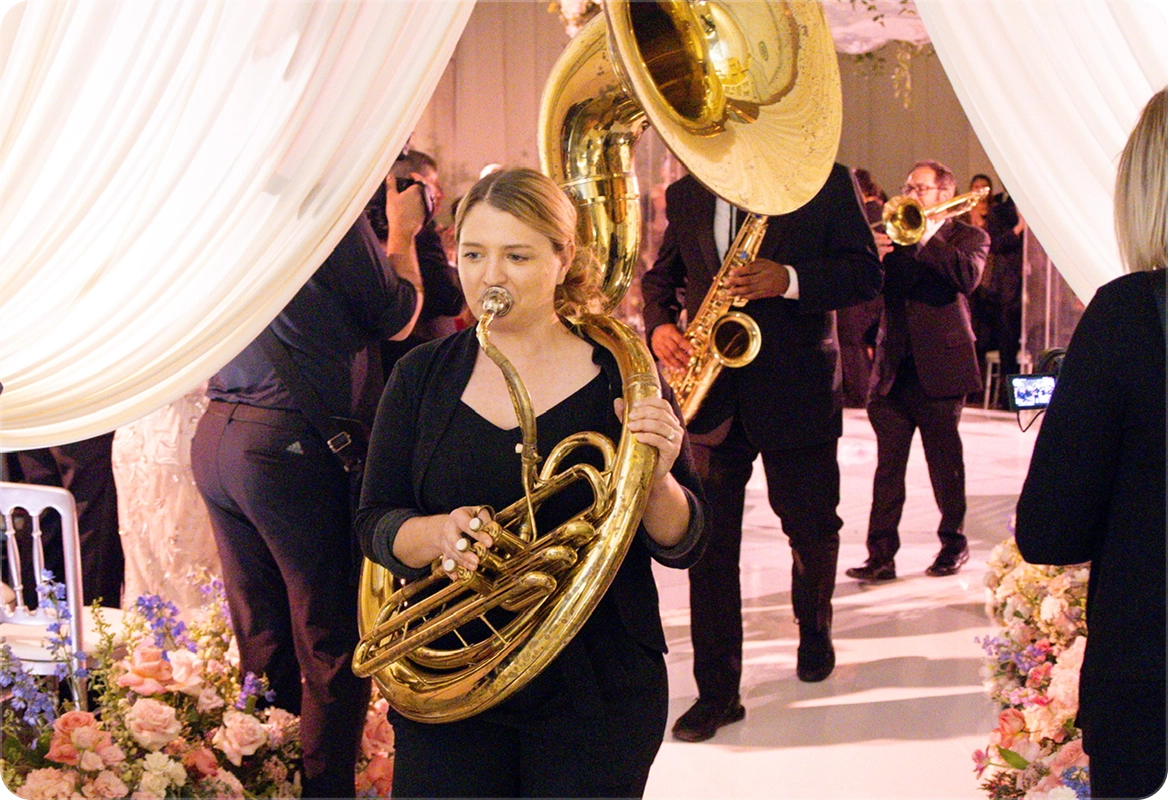
An awards or recognition night is, structurally, closer to producing a live broadcast than hosting a party. There’s a script, a sequence of presenters and honorees, specific moments that need to land with real impact, and very little tolerance for a musical cue that’s early, late, or wrong. Getting this right requires a band that thinks in terms of production and timing, not just a set list.
Walk-on and walk-off music, done properly.
Every honoree or presenter who takes the stage deserves a moment that feels considered, not a random song cued from a general playlist, but a specific piece of music, timed precisely to their entrance and exit, that matches the tone of their moment. A lighthearted category calls for something different than a lifetime achievement award, and a band capable of reading that distinction, category by category, adds a level of polish that’s hard to replicate with a fixed pre-recorded track.
Transitions that don’t feel like dead air.
Between award categories, during a stage reset, or while the next presenter is being introduced backstage, there’s almost always a short window that needs to be filled musically without becoming its own distraction. These transitions are easy to get wrong, either awkwardly silent or jarringly loud, and a band experienced with this kind of program-driven event knows how to fill that space so the evening never loses its momentum.
The turn into celebration.
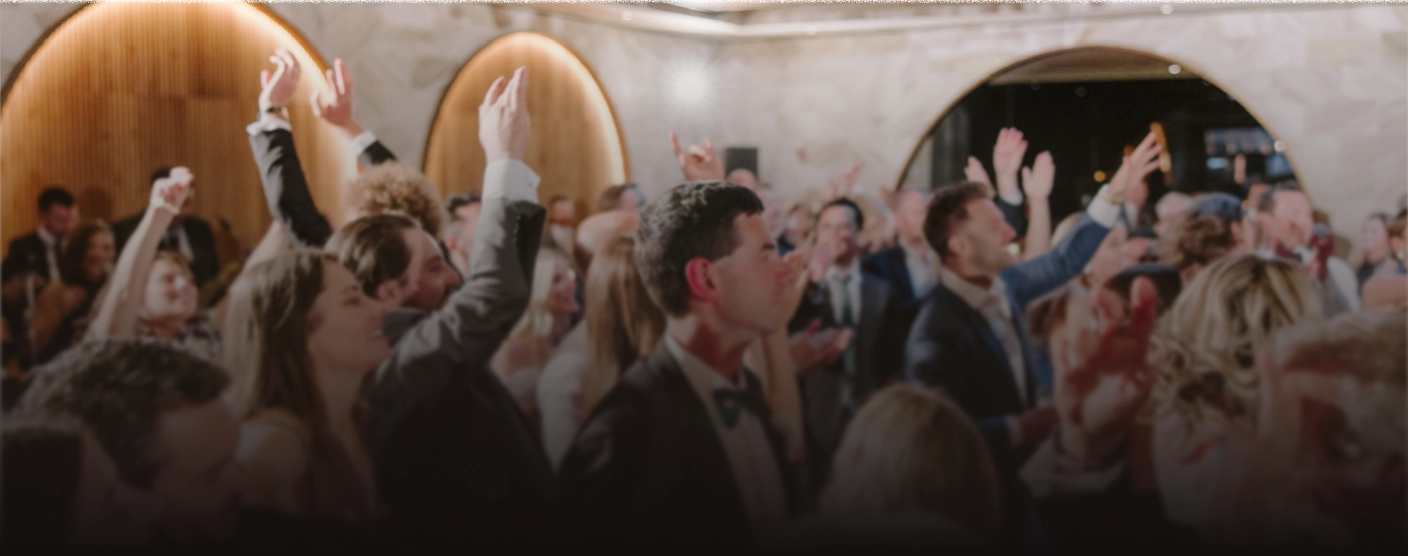
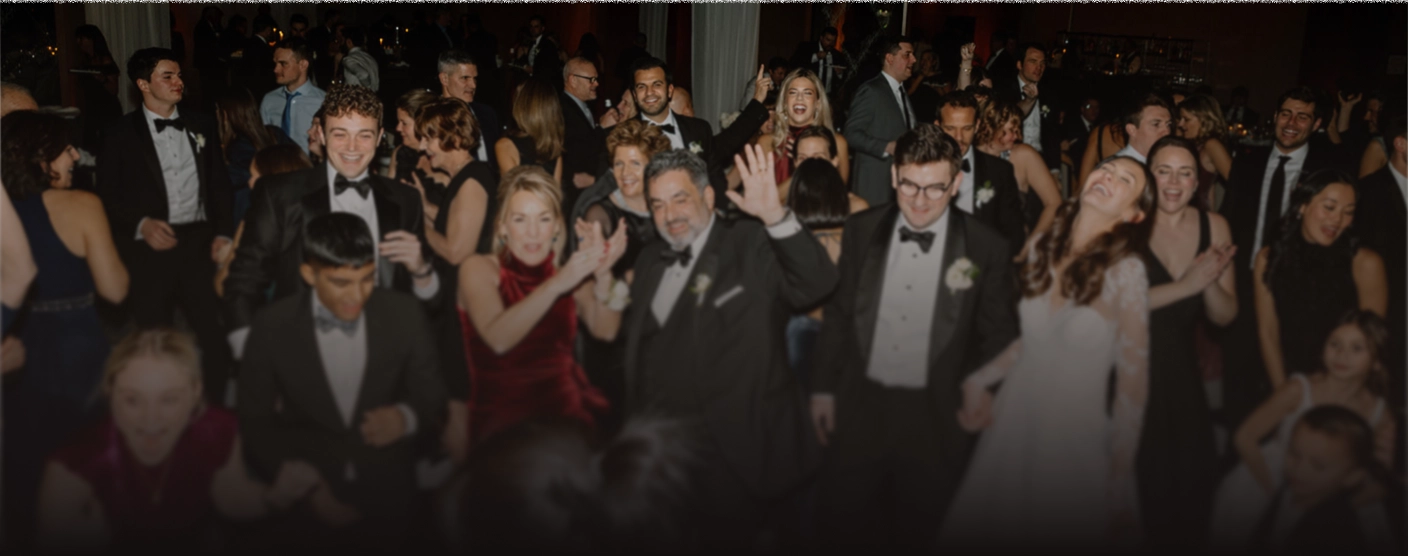
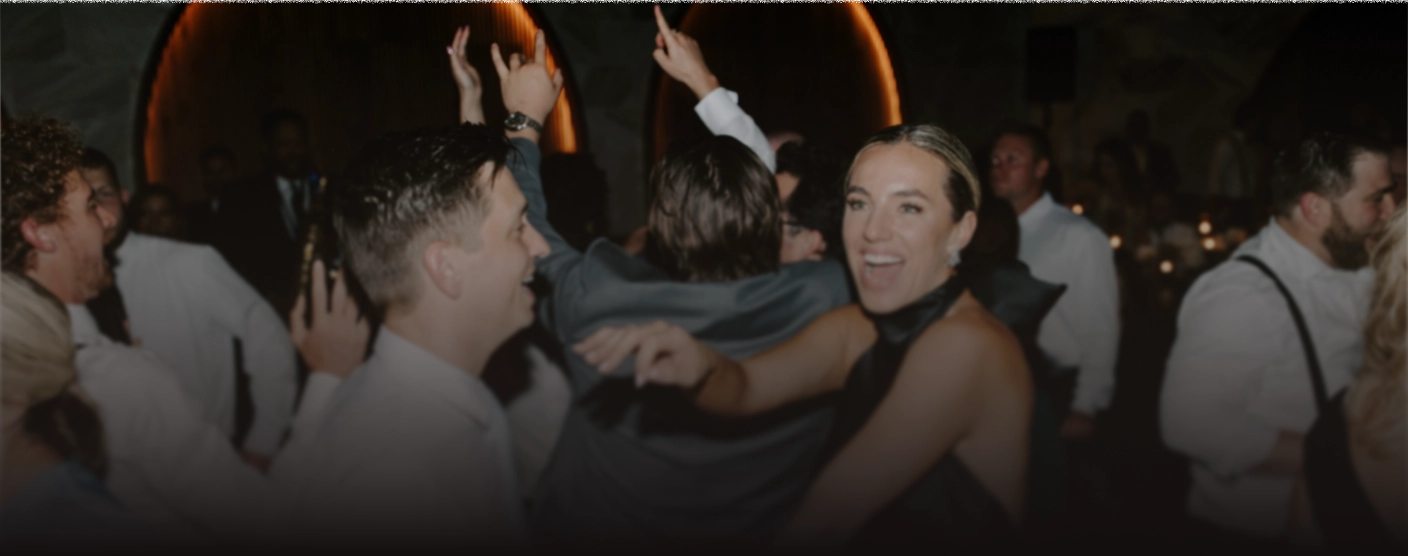
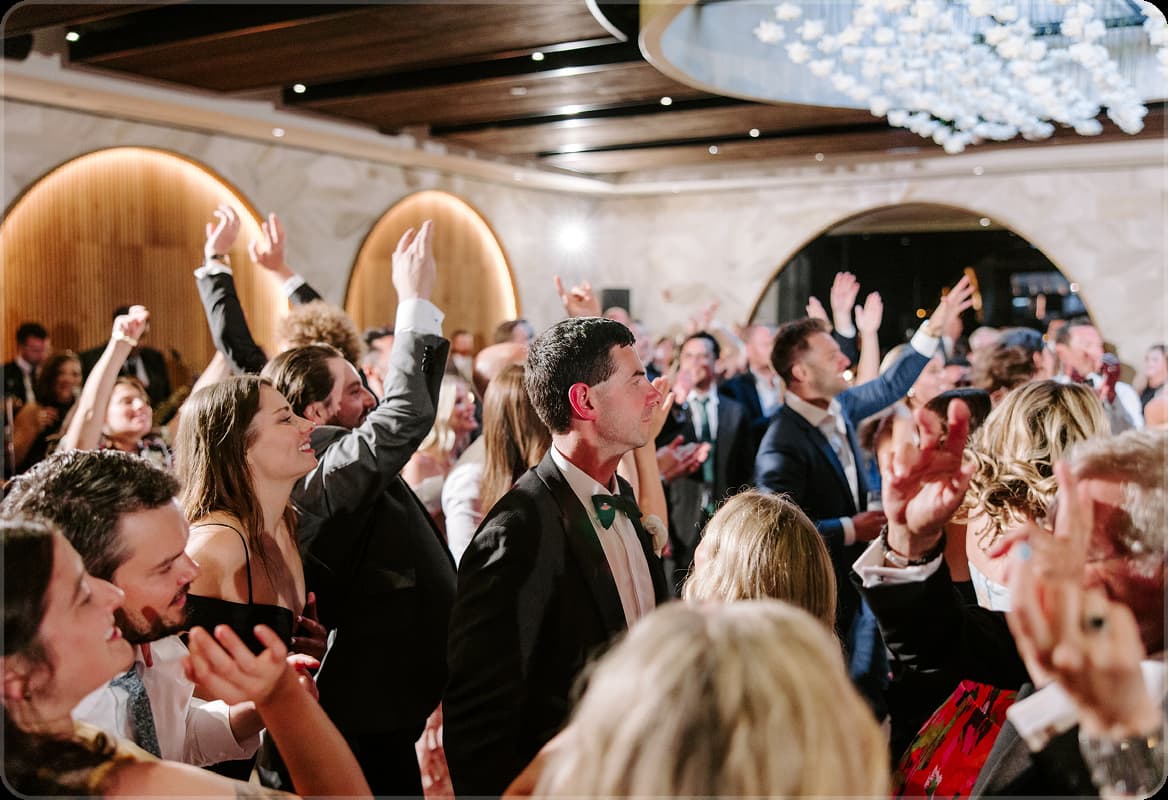
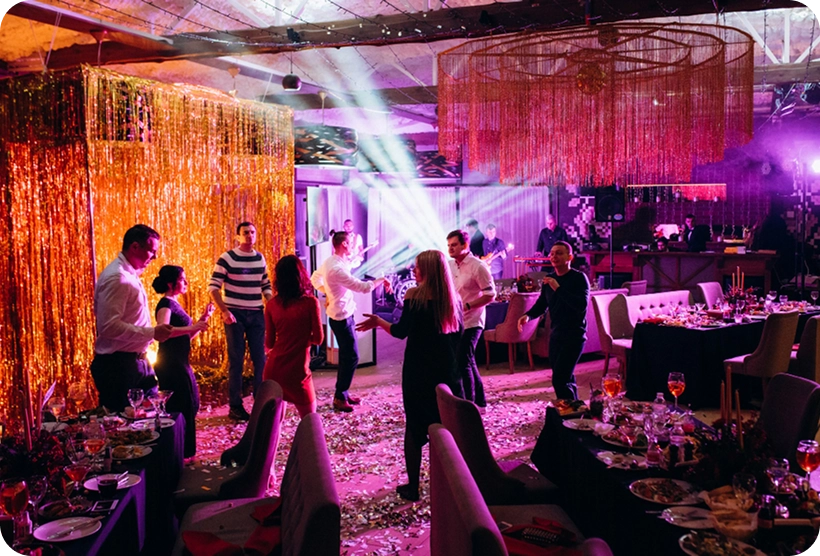
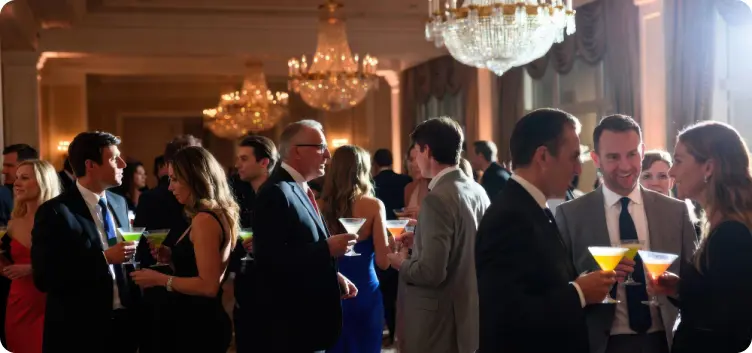
Once the formal recognition portion of the night wraps, most award shows shift into a more open, celebratory phase: the afterparty portion of the evening, where honorees, colleagues, and guests finally get to celebrate without the structure of a program running. This is where the band can open up fully, shifting from precise, cue-based performance into a genuine full-energy set built to fill the floor.
Coordinating with a production team.
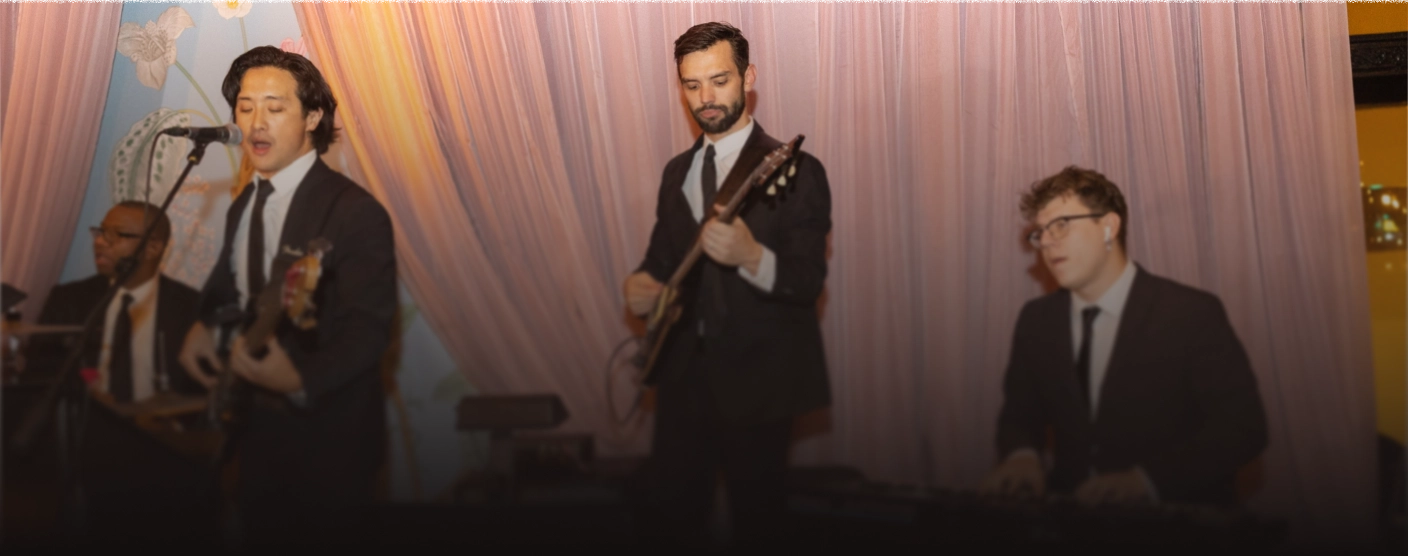
Award shows are frequently run with a stage manager, AV team, and a detailed run-of-show document, and the band needs to integrate into that structure as one more precisely timed element rather than operating independently. That means rehearsing cues in advance, staying in close communication with whoever’s calling the show, and being ready to adjust on the fly if the program runs long or short, which on a night with a live audience and live speeches, it usually does.
Managing the emotional register category by category.
A single award show often moves through wildly different emotional registers within the same hour: a lighthearted “most improved” style award followed immediately by a genuinely moving lifetime achievement moment, followed by a high-energy team award that the whole room is excited about. A band that treats every category the same way, musically, flattens all of that into a single uniform tone. Getting it right means reading each award category individually and calibrating the walk-on music, the underscore during remarks, and the walk-off music specifically to that moment, rather than running a generic “award ceremony” playlist underneath the entire program.
Handling unplanned speeches gracefully.
Even the most tightly run award show includes at least one honoree who speaks longer than expected, gets visibly emotional, or goes off-script in a way that changes the room’s mood in real time. A band experienced with this format knows how to respond in the moment, softening the underscore, holding a musical cue a beat longer than planned, or adjusting the walk-off entirely if a speech runs unusually long or short rather than executing a fixed plan regardless of what’s actually happening on stage.
The value of a band that’s done this before.
Award shows reward experience in a way that’s hard to fake. A band that’s worked recognition events before understands the rhythm of a run-of-show document, knows how to take a cue from a stage manager mid-performance, and has already made the mistakes that come from learning this format on the fly. For an event where timing errors are highly visible to a room specifically gathered to watch a program unfold, that experience is part of what’s actually being booked.
Best for: industry award shows, employee recognition galas, honoree dinners, and any evening built around a structured program of presentations that needs precise musical support.
Less of a fit if: the event doesn’t have a formal awards or recognition structure. A straightforward corporate celebration without a program to build around is better served by the Corporate Gala configuration.